- Intellego Newsletter
- Posts
- Psych Safety


If you make a mistake on a team, will it be held against you?
🎼 📖 Read Intellego #023 by listening to:
Inconveniences
Every problem starts small. It does not matter the area of your life - personal or professional. The devil is in the details. You've heard this saying before.
It starts with a grim joke, miscommunications, an unfitting comment in a meeting, a teammate’s unsolicited opinion, or an urgent task handled after working hours. And there's more...
A coworker commented you’re no longer part of the company.
Experienced colleagues are chronically late and tired.
Someone else has got the project that excites you.
Your boss keeps rescheduling meetings.
A teammate takes credit for your work.
A coworker breaks a confidence.
Never-ending reorganization.
Persistent health issues.
High turnover rates.
Micromanagement.
More layoffs.
Gaslighting.
Confusion.
Anxiety.
Stress.
Pain.
End.
No.
Boom! The chaos is impending. Things get out of control. While demands and expectations increase, you lose sight, energy, hope, and clarity.
These are the subtle work harassment. They erode your psychological safety. You hesitate to express your views on a project. Or worse, you don’t feel heard at all.
An environment without space for divergence is not psychologically safe. This is how companies lose talents and great contributors. They simply walk away.
It’s easy to see how business as usual can feel like betrayal as usual. You don’t need much, only one occasion to break the trust glass ceiling. Only one breach or the perception of that trust breach is enough.
Any group is a political arena. Workplace is no different. Working with diverse teams in multinational companies involves carefully navigating various interests and perspectives.
We live in a complex and dynamic business landscape. Psychological safety has emerged as a critical factor in organizational success.
It allows employees to speak up, share ideas, and voice concerns without fear of retribution or embarrassment.
Employees want to feel safe, respected, and confident to voice their opinions.
Companies are now realizing that. Fostering psychological safety in the work environment is not only an ethical responsibility but also a strategic necessity.
"Vulnerability is not winning or losing; it’s having the courage to show up and be seen when we have no control over the outcome."
Concept & Benefits
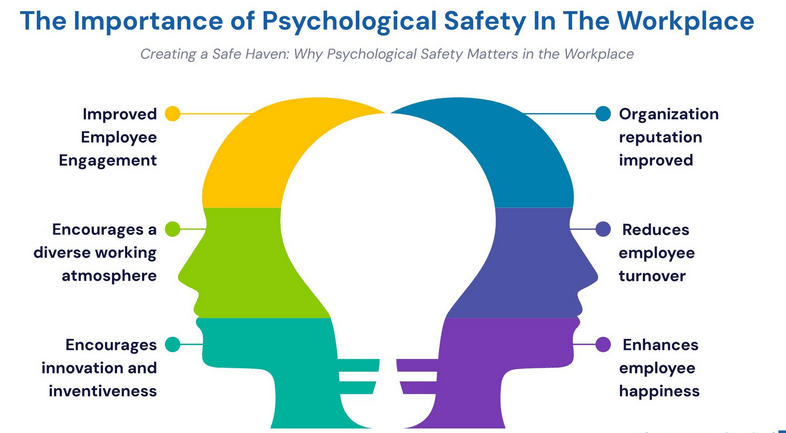
Psychological safety is a shared belief that a person or a team will not suffer punishment or humiliation for speaking up with ideas, questions, concerns, or mistakes.
In simpler terms, it means not being afraid to express ideas, to be different, to disagree, to ask for help, to offer solutions, to be who you are.
An environment that doesn't provide you with any of these aspects, will not value you and will not be a fertile soil for your development. Be aware!
The goal of effective leadership is to foster an atmosphere that promotes and supports interpersonal risk-taking.
This concept is essential for learning, innovation, and growth, allowing team members to contribute fully and authentically.
The benefits of psychological safety are manifold and impact various aspects of organizational health and performance:
Enhanced Learning and Innovation: Teams that feel safe are more likely to experiment, share new ideas, and learn from failures. This culture of continuous learning and innovation is vital for organizations to adapt and thrive in a ever- changing business environment.
Improved Employee Engagement and Well-being: When employees feel safe to express themselves, they are more engaged and satisfied with their work. This leads to higher job satisfaction, lower turnover rates, and overall improved mental health.
Better Team Performance: Teams that exhibit high psychological safety are more cohesive and collaborative. This trust and openness improve decision-making processes and problem-solving abilities, leading to superior team performance.
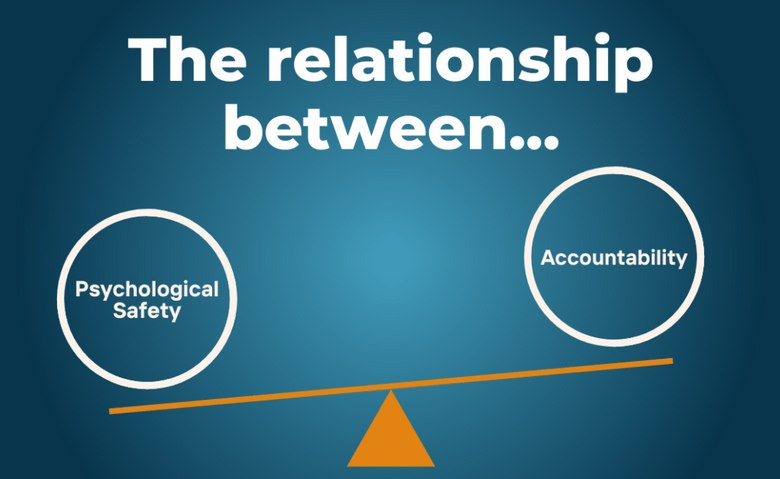
Reduced Errors and Increased Accountability: In a psychologically safe environment, employees are more likely to report mistakes and near misses, enabling the organization to learn from these errors and prevent future occurrences. This culture of accountability fosters a sense of responsibility and continuous improvement.
"People will forget what you said. People will forget what you did. But people will never forget how you made them feel."
Importance & Metrics
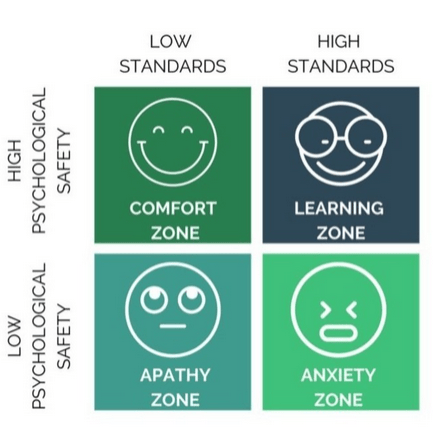
Why Organizations should care about psychological safety? Here are a couple of reasons:
Facilitates Communication and Collaboration: Open communication is the bedrock of effective teamwork. Psychological safety ensures that all team members feel comfortable sharing their thoughts and collaborating without fear of negative consequences.
Supports Diversity and Inclusion: A psychologically safe environment values diverse perspectives and encourages contributions from all employees, regardless of their background or status. This inclusivity leads to richer discussions and better decision-making.
Enhances Change Management: Organizations constantly face changes, whether through new technologies, market dynamics, or internal restructuring. Psychological safety helps employees navigate these changes by fostering a culture where you can openly discuss concerns and suggestions.
Promotes Resilience and Agility: In a safe environment, employees are more adaptable to setbacks. They wish to take risks and explore new solutions, which are essential for organizational agility.
Measuring psychological safety can be difficult, as it is subjective. But, various tools and methods can provide valuable insights into the level of "safe space" within a team or organization:
Surveys and Questionnaires: Instruments like the Psychological Safety Index, developed by Amy Edmondson, can gauge the level of psychological safety within teams. Questions typically assess the extent to which team members feel safe to take risks, express themselves, and rely on each other.
Focus Groups and Interviews: Conducting in-depth discussions with employees can provide qualitative insights into the team’s dynamics and psychological safety. These conversations can reveal specific areas of concern and opportunities for improvement.
Observation and Feedback: Leaders can observe team interactions and solicit feedback to understand the psychological climate. Look for signs of openness, trust, and support in team meetings and collaborative efforts.
Performance Metrics: While indirect, metrics such as employee engagement scores, turnover rates, and error reports are indicators of the level of psychological safety. You can observe high engagement and low turnover in a psychologically safe environment.
"When there is trust, conflict becomes nothing but the pursuit of truth, an attempt to find the best possible answer."
Strategies

Do you feel safe to take a risk in the organization you work at?
Creating a psychologically safe environment requires deliberate actions and a supportive culture. How can leaders actively promote psychological safety in a workplace? Here are some takeaways gathered along my journey:
Encourage Open Communication: Leaders should model open and honest communication, inviting team members to share their thoughts and concerns without fear of reprisal. You can foster it through regular check-ins, feedback sessions, and open-door policies.
Embrace Vulnerability: Leaders who acknowledge their own mistakes and uncertainties create an atmosphere where it is safe for others to do the same. This vulnerability builds trust and encourages learning from failures.
Show Empathy and Support: Demonstrating empathy and support towards employees’ experiences and emotions fosters a sense of belonging and safety. Leaders should actively listen, validate feelings, and provide assistance when needed.
Celebrate Diversity of Thought: Valuing different perspectives and encouraging debate can enhance creativity and problem-solving. Leaders should actively seek out and appreciate diverse viewpoints, ensuring that all voices are heard.
Set the tone: Establish clear expectations for respectful and constructive behavior helps create a predictable and safe environment. Teams should establish norms for communication, conflict resolution, and decision-making processes.
"When we feel safe inside the organization, we will naturally combine our talents and strengths and work tirelessly to face the dangers outside and seize the opportunities."
Conclusion
The world is changing, and organizations need to evolve and keep up with the new challenges and demands.
If everyone always agrees, you end up with a team of people-pleasers and no improvements. That's the reality of many businesses.
Innovation emerges from differences, discomfort, challenges, and chaos. Without disagreement, dialogue, debate, there is no change.
The fear of speaking up stifles creativity. This leads to old ideas and processes being recycled and perpetuated.
Choose a space where you can speak up and express your ideas without the fear of retaliation. Your gut health will thank you later.
It's not healthy to repress your thoughts. Let them flow and find safe environments to discuss them. Remember, you're not alone.
Is constant agreement within a company detrimental? Of course, it is.
Innovative thinkers seek places to work where they can openly disagree with their leaders without the risk of being fired or humiliated.
Disagreeing as well as laughing are acts of resistance. Taking care of our well-being is our daily responsibility. However, people neglect themselves.
A healthy level of disagreement is not a liability as many think. It's an opportunity to create better companies and communities.
An environment where it is not safe to disagree or question the status quo is not an environment focused on growth.
Pay attention to the signs. People leave cues, we're just too distracted to notice them.
“Things only reveal themselves to consciousness through the frustration they provoke.”
Talk to you next week.
Light and peace,
—FMV
🧠 My Mental Download:
📕 (1) What I'm reading
🎧 (2) What I'm listening to:
🤓 (3) What I'm studying:
🤿 Keep diving and exploring:
💡 Intellego is the process of gaining insights to better understand the world.
✍️ Letter is written by Fabíola Maia-Veres every Tuesday at 7pm.
🐝 Newsletter is configured and sent by BeeHiiv.
💬 📝 How did it go?
Any comments, critics, or suggestions? Reply to this email or reach out on Instagram or LinkedIn. Your feedback fuels my writing.