- Intellego Newsletter
- Posts
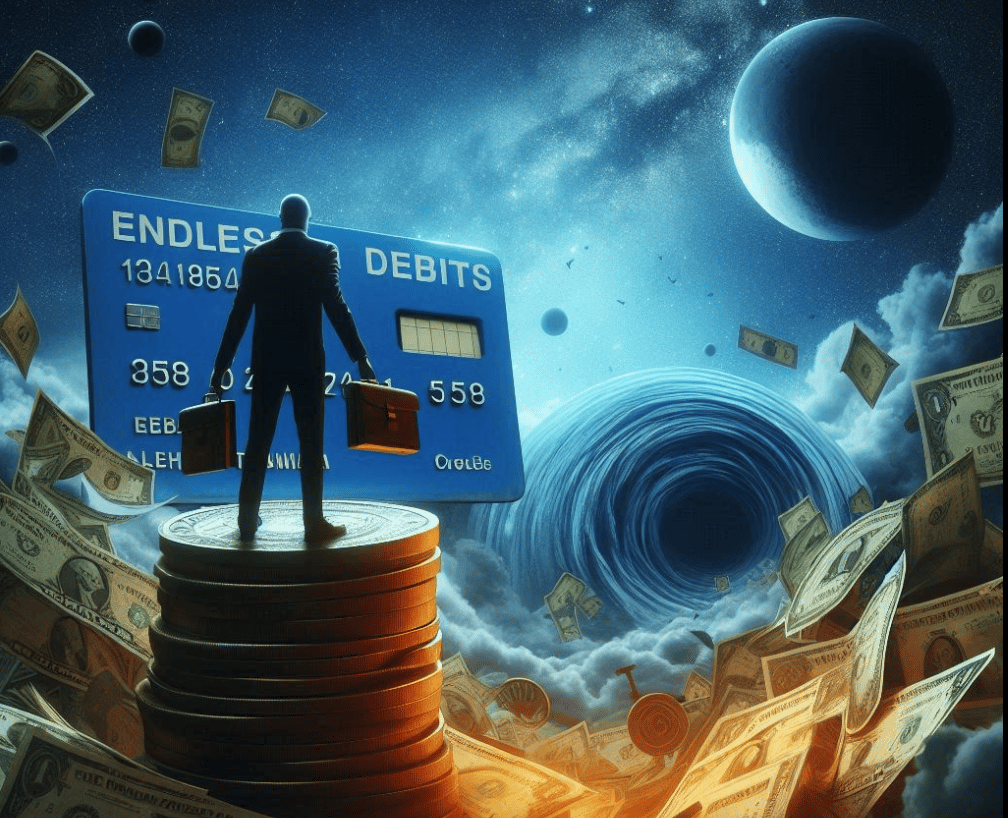
- Endless Debts


Debt trap, easy enough to get into, but hard enough to get out of.
🎼 📖 Read Intellego #032 by listening to:
Crisis
The world is sinking into debt. Clock is ticking and the bomb will explode anytime. But who is gonna save us from the endless debt pit? Nobody will protect us against financial distress, except ourselves.
Global debt stands at an unprecedented level. Governments, businesses, and households altogether owe over $300 trillion. I can’t even conceive this number in my head.
Economic recessions, high levels of consumer spending, money printing, and the need for large-scale government interventions.
These factors exacerbated the staggering debt figure, as we have seen in the COVID-19 pandemic.
High levels of public debt can lead nations to a vicious cycle of borrowing, where the interest payments on existing debt consume a significant portion of government revenues, leaving less available for essential services like education, healthcare, and infrastructure.
This can suppress economic growth, increase inequality, and even lead to sovereign debt crises, where countries cannot meet their debt obligations.
Yes, defaults happened and will keep happening. Consider historical events: the Stock Market Crash of 1929, and the Subprime crisis of 2008.
What did we learn from these events?
What were the major consequences?
What can we do to prevent falling into the same economical pit?
High levels of personal debt, often stemming from credit cards, student loans, or mortgages, can lead to financial stress, reduced disposable income, and in severe cases, bankruptcy.
The burden of debt destroyed and will take lives. It affects mental health, relationships, and overall quality of life, creating a cycle of financial instability that can be difficult to escape.
“A man in debt is so far a slave.”
Why Debt is Harmful?

If you're in debt, money will trigger negative emotions such as shame, guilt, frustration, and anxiety.
Look around - what do you see? I see a few having too much, many having too little.
The interest on your debt will accumulate no matter what. One of the most harmful aspects of debt is the cost of interest. But there are more:
Economic Instability: For countries, high public debt can lead to inflation, currency devaluation, and loss of investor confidence. For individuals, high personal debt can reduce spending power, leading to a decrease in overall economic activity.
Interest Payments: Nations burdened with high debt levels often spend their budget on interest payments, leaving less for other essential expenditures. For me and you, interest in loans and credit cards can quickly build up, making it difficult to pay off the principal amount.
Reduced Financial Flexibility: Nations may find it challenging to respond to economic crises or invest in future growth with high debt levels. Similarly, any person with significant debt has less freedom to make financial decisions, such as investing in education, starting a business, or saving for retirement.
Default Risk: The risk of default cause significant concern. Sovereign debt defaults can lead to economic collapse, as seen in countries like Greece during the Eurozone crisis. For individuals, defaulting on loans can lead to legal consequences, loss of assets, and a damaged credit score.
“Debt is the slavery of the free.”
Strategies to Pay Off Debt

1. Debt Analysis
The first step in tackling debt is to conduct a thorough analysis of your financial situation. The 'pay-down-debt journey' begins with three crucial steps:
Identifying debts and obligations: List all debts, including balances, due dates, interest rates, and minimum payments.
Recognizing spending habits: Calculate your needs (rent, utilities, transportation, clothing, and food). The rest of your income represents discretionary spending.
Creating a budget: Cover your basic bills before paying off debt. A good start is to know your numbers, get clarity where you stand, then organize your financial situation as I wrote here.
“A journey of 1,000 miles begins with a single step.”
2. Debt Snowball Method
This popular strategy involves focusing on paying off the smallest debts first while making minimum payments on larger debts.
Once you paid off the smallest debt, move on to the next smallest, and so on. This method leverages the psychological benefits of seeing debts eliminated quickly, which can motivate continued progress.
Example: If John has three debts—$1,000, $3,000, and $5,000—the debt snowball method would prioritize paying off the $1,000 debt first. The money he used to pay off debt then he will allocate for the next, creating a 'snowball' effect.
Pros: Quick wins that provide motivation and simple to implement strategy.
Cons: May not be the most cost-effective due to potentially higher interest rates on larger debts.
“You can't be in debt and win. It doesn't work.”
3. Debt Avalanche Method
The debt-habit is the twin brother of poverty.” — Theodore Munger
The debt avalanche method is an alternative approach that focuses on paying off the debts with the highest interest rates first, regardless of the balance. This method is more cost-effective in the long run because it minimizes the amount of interest paid with time.
Example: If John has debts with interest rates of 20%, 10%, and 5%, the debt avalanche method would prioritize paying off the debt with the 20% interest rate first, followed by the 10% and then the 5% debt.
Pros: This strategy minimizes total interest payments and promotes faster overall debt reduction.
Cons: Progress may feel slower if high-interest debts also have large balances.
“Interest on debt grows without rain.”
4. Debt Consolidation
Debt consolidation involves combining multiple debts into a single loan, often with a lower interest rate.
This strategy can simplify the repayment process by reducing the number of payments and potentially lowering the overall cost of the debt. It's beneficial for people with high-interest credit card debt.
5. Budgeting & Expense Reduction
Effective budgeting is crucial for managing and paying off debt. People with debt problems should create a detailed budget that prioritizes debt repayment, reduces unnecessary expenses, and allocates any extra income towards debt.
6. Increasing Income
Increasing income is another effective strategy for paying off debt. For individuals like me and you, this might involve taking on a second job, freelancing, entrepreneurship or selling assets.
For nations, this could mean increasing tax revenues, improving economic growth, or securing foreign investment.
“The borrower is a servant to the lender.”
Conclusion
I’ve been there. I was tired, worried, and frustrated with my financial situation. Until the day, I changed it all. I took responsibility for my financial life.
Paying off debts requires education, planning, discipline, patience and perseverance, but it's achievable.
When managed properly, debt can be a useful financial tool. However, excessive debt levels can lead to severe financial harm.
It's possible to regain control over your finances and work towards a debt-free future. Freedom is power.
It's key to understand the nature of debt, implement effective strategies, take proactive steps, stay disciplined, and remain committed to the goal of financial stability.
I urge you to educate yourself. Become financially literate. There’s no other way out of this hamster wheel. If I could do it, you can do it too.
The clock still ticking. Waste no time. But the choice remains yours.
“Beware of little expenses; a small leak will sink a great ship.”
Talk to you next week.
Light and peace,
—FMV
🧠 My Mental Download:
📕 (1) What I'm reading:
🎧 (2) What I'm listening to:
🤓 (3) What I'm studying:
🤿 Keep diving and exploring:
💡 Gain insights to better understand the world.
✍️ Written by Fabíola Maia-Veres every Tuesday at 7pm.
🐝 Newsletter is powered by BeeHiiv.
💬 📝 How did it go?
Any comments, critics, or suggestions? Reply to this email or reach out on Instagram or LinkedIn. Your feedback fuels my writing.